Defining Digital Innovation With B Tech Colleges

Defining Digital Innovation With B Tech Colleges

Transform your skills with experiments

Digital transformation and digital innovation in today’s age are very popular. Technology like virtual reality receives a lot of hype every year but not as developed in an expected way. But digital transformation is happening across almost every industry due to the education of B Tech Colleges. Arya is also one of the best engineering colleges.

Companies having digital mentality do not require transformation. Rather, organizations pivoting to digital platforms can help students of a B Tech college in Jaipur to survive and thrive in today’s landscape. The term Digital transformation is not only about technology; instead, it is an ability to utilize digital technology to solve traditional problems. It is the process of holding advancements or innovating with technology to re-imagine how business is done.

Improve your digital experiences

Digital disruption has a sometimes deadly effect on businesses. It fails to transform and improve experiences or create efficiencies and lower costs. Advancements like machine learning, internet of things (IoT), artificial intelligence (AI), and Omni channel experiences continue to evolve. Each of these technologies has the power to drive serious growth for companies while automating tasks otherwise reserved for humans. This may sound like a problem reserved for software companies or IT department of Top engineering colleges in Rajasthan, but every organization can stand to benefit from holding digital technology.

Start finding opportunities ?????

 To read continue with ARYA COLLEGE
Myths and Misconceptions of MBSE

Transitioning system engineering to a model-based.png

With the advent of time, systems are getting more complex. It ranges from autonomous vehicles to smart energy grids to the Internet of Things, and System Engineering must keep pace.

Creating and testing physical prototypes is too expensive and time-consuming in different cases. Systems must rely on digital models until the final stages of development. But this raises a new challenge for the students of B Tech Colleges in Jaipur. Like so many digital models in use, how do the systems developers keep them consistent and use them together effectively?

The requirements for a new class of digital frameworks for Model-Based System Engineering (MBSE) are becoming clear. Below given are some examples.

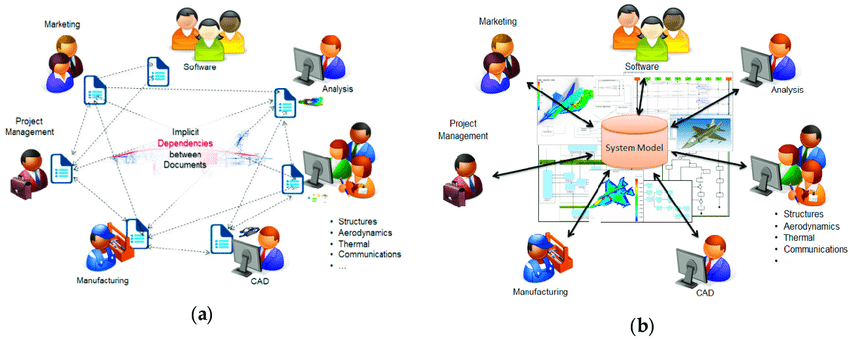
MBSE supports a single, digital model of the system, the Total System Model (TSM)

Model-based system engineering replaces document-based systems engineering, where communications between engineers of Top Engineering Colleges and models in different disciplines are by emails, slides or spreadsheets.

Federation, not centralization, is the most practical strategy for building the TSM

Few organizations want to replace all their existing software tools for requirements, architecture, design, and analysis and project management. In other words, they will try to centralize all system data into a single database.

Federation calls for most of the system data and engineering efforts of the students of Engineering Colleges in Jaipur to remain invested in existing tools, but an MBSE Platform connects them. No single tool is indispensable or the hub for all connections.

The MBSE platform will be an enterprise application

Systems engineering is not just for systems engineers anymore. The functionality to create, use, query and visualize the connections between model elements in different tools should reside in the cloud or an on-premises server.

It should also be available to all the members of the project team of Top 10 Engineering Colleges, through a variety of portals. It includes computers, tablets, and even smartphones. Also, it must be scalable, with rapid response times, to the largest projects with millions of elements.

The MBSE platform supports the full system lifecycle

The platform must support the entire system lifecycle, creating a digital thread from design to manufacturing to operations.

Connecting design data to manufacturing, quality, logistics and field deployment data provides traceability and better diagnostics. It also requires that the TSM be configuration-managed, just as many of the individual domain models are.

The MBSE platform must be methodology-independent

The platform should not enforce a specific workflow, so it should support multiple use cases of the students of Best Engineering Colleges. These include connections that link different elements in different tools and model transformations that share information across domain boundaries. It also implies the ability to program the platform through user-written apps and scripts to support any particular organization’s engineering processes.


The watershed moment for underwater drones

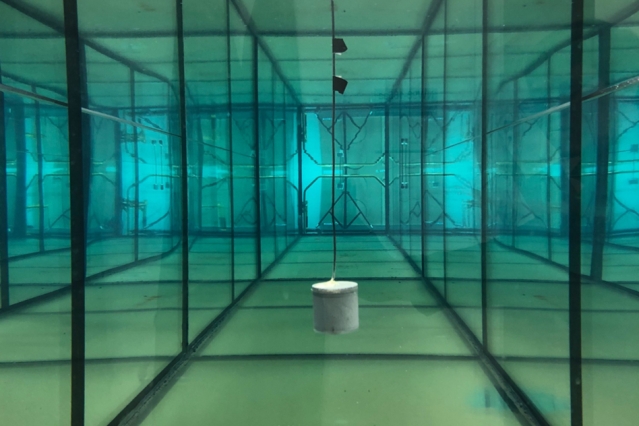
A battery free sensor for underwater exploration.jpg

With the advent of time, science and technologies are become diversified in nature. In order to investigate the vastly unexplored oceans that cover most of our planet, professionals of Computer Science Engineering at B Tech Colleges aim to build a submerged network of interconnected sensors. It sends data to the surface which is an underwater “internet of things.”

How constant powers can stay for a long duration in the ocean?

Top Engineering Colleges in Rajasthan has introduced a battery-free underwater communication system that uses near-zero power to transmit sensor data. The system uses to monitor sea temperatures to study climate change and track marine life over long periods. It also works on sample waters on distant planets.

The system uses two key phenomena by the students of the Best Engineering Colleges in Rajasthan, One, called the “piezoelectric effect,” occurs when vibrations in certain materials generate an electrical charge. The other is “backscatter,” a communication technique commonly used for RFID tags that transmits data by reflecting modulated wireless signals off a tag and back to a reader.

Functions of the sensor for underwater exploration

In this system, a transmitter sends acoustic waves through the water toward a piezoelectric sensor having stored data. When the wave hits the sensor, the material vibrates and stores the resulting electrical charge into it. Then, the sensors make use of the stored energy to reflect a wave back to a receiver.

Once students of Computer Science Engineering at B Tech College in Jaipur have a way to transmit 1s and 0s, they can send any information. It enables communication with underwater sensors solely on the incoming sound signals whose energy is harvested.

Preventing deformation

Students of Top 10 Engineering Colleges in Jaipur have found that an individual cannot use Wi-Fi or Bluetooth signals for underwater exploration. Putting batteries all over the ocean can raise several issues with pollution.

Communication relies on preventing the piezoelectric resonator from naturally deforming in response to strain. At the heart of the system is a submerged node, a circuit board that houses a piezoelectric resonator, a microcontroller, and an energy-harvesting unit. Any type of sensor can integrate into the node by programming the microcontroller by the students of Arya College.

Long-term deep-sea sensing

The transmitter and receiver must have power but can be planted on ships or buoys. In this, batteries are easier to replace, or connected to outlets on land. One transmitter and one receiver can easily gather information from many different sensors covering one area or many areas.

Another interesting application is monitoring brine pools, large areas of brine that sit in pools in ocean basins. They are difficult to monitor for the long-term. You can sense what is happening down there, without needing to keep hauling sensors up when their batteries die.

The system still needs more experimentation, especially in seawater. This might be the ultimate solution for the experts of Engineering Colleges in Jaipur in marine biography, oceanography, or even meteorology.